NeoDefender

Make Copilot and AI safe to use in your organization

Govern over ChatGPT, Copilot, and Claude. Protect sensitive information and enforce practical user policies without blocking innovation.

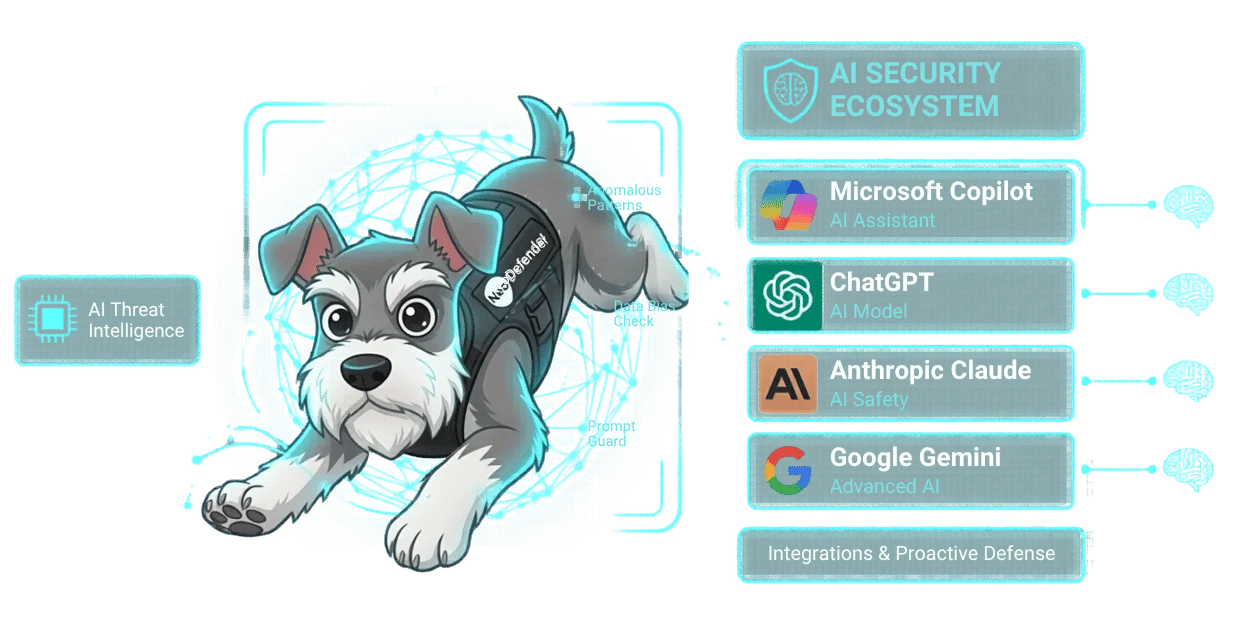
Neo Defender Schnauzer mascot overseeing safe Copilot and AI usage

The AI risks SMBs are quietly accumulating

Microsoft 365 Copilot deployment has accelerated faster than the governance work behind it. The pattern we find in tenant audits is consistent: licenses activated, prompts flowing, and zero visibility into what organizational data is being read, summarized, or exposed. Shadow AI tools (ChatGPT, Claude, Perplexity, specialized vertical AI) compound the problem by processing client data, code, and proprietary content on platforms outside the organization's control.

Shadow AI usage with no visibility

Employees adopt AI tools faster than IT can evaluate them. Customer data, contract drafts, and internal documents flow into platforms whose data retention, jurisdiction, and training policies are unknown to the organization. We unpack the pattern in our shadow AI discovery findings.

Copilot oversharing risk

Copilot surfaces organizational data based on what the user technically has access to. SharePoint sites, OneDrive folders, and Teams content from years of organic growth contain data exposures most leadership teams never knew existed. That is why Copilot governance has to come before rollout.

No audit trail or accountability

Without governance controls, AI interactions leave no audit trail. When a data leak, compliance incident, or vendor security questionnaire requires explanation, the organization has no answer about what AI saw or shared. The stakes are visible in recent insider and AI data exposure cases.


Two services, one outcome: AI that works without surprises

We treat AI security as a continuous discipline, not a one-time configuration. Our work falls into two complementary engagements that organizations typically need together.

Project engagement, 8-12 weeks typical

AI Security Implementation

We audit your tenant, design the governance architecture, and deploy the controls that make AI safe to use.

  • Tenant permission audit before any AI feature activation
  • Microsoft Purview sensitivity labels and auto-labeling policies aligned to your data classes
  • DLP policies scoped to Copilot, ChatGPT, and other AI interactions
  • Defender for Cloud Apps shadow AI discovery and risk classification
  • Conditional Access policies tied to AI tool usage
  • Copilot rollout planning with structured pilot phases
  • Audit logging configured for AI activity oversight
Discuss implementation

Monthly ongoing, no fixed term

AI Security Managed Service

AI risk does not sit still. New tools appear weekly, employees adopt them faster than IT can review, and governance drifts over time. Our managed service keeps the controls operational.

  • Monthly shadow AI discovery review and risk classification
  • Quarterly access permission review for AI-touched resources
  • Continuous monitoring of Copilot audit logs and DLP incidents
  • New AI tool evaluation and sanction/block decisions as they appear
  • Sensitivity label drift detection and remediation
  • Quarterly executive briefing on AI security posture
  • Incident response for AI-related data exposure events
Get Managed AI Security

Why this is different from what most MSPs sell

Security-first, not license-first

Most MSPs sell Copilot licenses and call it AI strategy. We start with the data governance audit and only activate AI features after the controls that protect your business are operational. The order matters more than people realize.

Ongoing, not project-only

AI tools change faster than annual project cycles can handle. Our managed cybersecurity posture keeps governance current as the AI landscape moves, not just at the moment of initial implementation.

Microsoft ecosystem-native

We use the controls already in your Microsoft 365 licenses: Purview, data classification, Defender for Cloud Apps, Entra ID Governance, and Conditional Access. The investment you have already made does most of the work, configured correctly, because ecosystem correlation beats isolated tooling.

Questions worth answering before the first call.

Does this block Copilot or just secure it?

It secures it. The goal is governed Copilot usage, not Copilot prevention. The work configures the data governance, sensitivity labels, and access controls that make Copilot answers respect the organization's data classification. Users get the productivity benefit. The organization gets the audit trail and the protection against oversharing.

What about ChatGPT and Claude, not just Copilot?

Defender for Cloud Apps shadow IT discovery surfaces all AI tools being used across the organization, including consumer AI accounts. Session policies and DLP can block sensitive content from flowing to unsanctioned AI tools while allowing approved usage to continue. The same governance framework that protects Copilot covers the broader AI surface.

Do we need Microsoft 365 E5 for AI security?

Not necessarily. Microsoft 365 Business Premium plus the Defender for Cloud Apps standalone add-on covers most SMB AI security needs at a lower cost than full E5. The exact license requirements depend on the AI tools in use and the compliance posture needed. License optimization is part of the engagement scope.

What is the difference between implementation and managed service?

Implementation is a project engagement (typically 8-12 weeks) that audits the tenant, designs the governance architecture, and deploys the controls. The managed service is monthly ongoing work that keeps the controls operational as new AI tools appear, employees adopt them, and governance drifts over time. Most organizations need both: implementation to start, managed service to sustain.

How fast can we get Copilot governance in place?

For an organization that already has Microsoft 365 Business Premium or E5, the foundational governance (sensitivity labels, DLP, audit logging) can be deployed in 4-6 weeks. Full coverage including Defender for Cloud Apps shadow AI discovery and ongoing managed monitoring extends to 8-12 weeks. The exact timeline depends on tenant complexity and the data governance starting point.

What happens if an employee tries to use an unsanctioned AI tool?

The response depends on the policy posture configured. Some organizations choose alerting only (the activity is logged, the user is not blocked). Others choose conditional access blocking with a redirect to sanctioned alternatives. Others apply session policies that block specific actions (upload, paste sensitive content) while allowing general use. The right balance is part of the implementation design.

Ready to make AI safe to use?

Implementation and managed service for organizations on Microsoft 365. We govern Copilot, ChatGPT, and Claude usage so productivity and security move in the same direction.

Schedule an AI Security Reality Check